
December 28, 2024
Step-by-Step Guide to Finding Orthologous Genes: Tools, Methods, and Applications in Bioinformatics
Finding orthologous genes is a critical task in bioinformatics and genomics as it helps identify genes in different species that…

Bioinformatics, AI, Genomics, Proteomics and Transcriptomics
Finding orthologous genes is a critical task in bioinformatics and genomics as it helps identify genes in different species that…

Introduction In bioinformatics, organizing a pipeline of small scripts is a crucial skill for efficiently processing and analyzing large volumes…

Genomics is undoubtedly special, and its importance continues to grow in both basic and applied sciences. As a bioinformatician, I…

Understanding forward and reverse strand conventions is fundamental in bioinformatics, particularly in the analysis of genomic data. This guide aims…

Efficient file management is crucial in bioinformatics projects due to the complexity, diversity, and volume of data generated. Whether you’re…

Bioinformatics has evolved from a niche area of research to a critical component of the life sciences. However, its journey…

This cheat sheet is designed to help bioinformaticians, especially beginners, quickly reference key concepts, commands, scripts, and useful tools that…
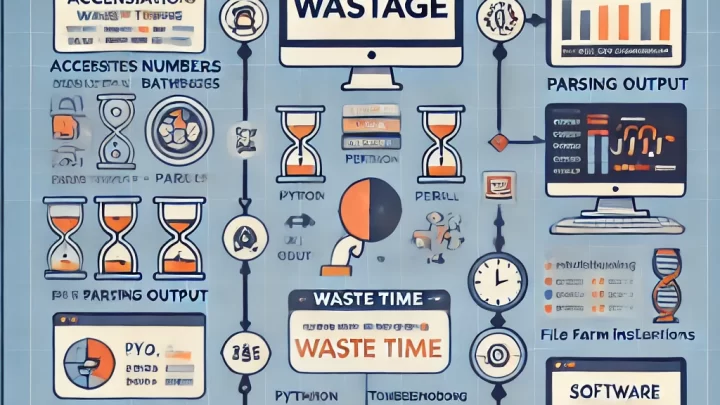
Bioinformatics is a data-driven field that requires efficient management of time and resources to prevent unnecessary delays in analysis. Many…

Introduction In bioinformatics, working with genomic data often involves handling coordinates that represent positions in a sequence, such as nucleotides…
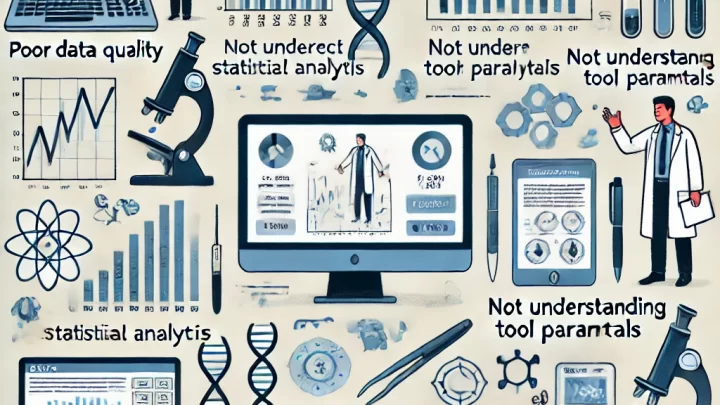
As a bioinformatician, it’s crucial to be aware of common mistakes that can impact data quality, analysis outcomes, and the…

Visualizing genomic feature data is crucial for understanding complex biological processes, identifying patterns, and deriving insights from genomic data. This…

Creating multiple histograms in a single plot is a common requirement in data visualization, particularly for comparative analysis. This guide…

Translation of RNA sequences to protein sequences is a fundamental task in bioinformatics. This process involves converting the codons (three-base…

Introduction to Minor Allele Frequency Definition: Minor allele frequency (MAF) is the proportion of the second most common allele (the…

ntroduction Counting sequences in a FASTQ.GZ file is a common task in bioinformatics for verifying data integrity, ensuring proper preprocessing,…

Heatmaps are essential tools for visualizing complex data, such as gene expression, in an intuitive and comprehensible manner. They provide…

This guide is designed to help beginners understand Synonymous and Non-Synonymous Single Nucleotide Polymorphisms (SNPs), how to distinguish between them,…

Introduction: In bioinformatics, BAM files are essential for storing aligned sequencing data, typically in the Binary Alignment/Map format. Sorting BAM…
1. Introduction: In bioinformatics, when performing read alignment (typically with tools like BWA, Bowtie, or HISAT2), we encounter two common…

Converting Affymetrix probes to gene IDs is an essential step in analyzing gene expression data derived from Affymetrix microarrays. It…